New-season office space audit: review rooms, desks and rules
On this page
Your booking list shows four meeting rooms, but agents keep asking for the same two. Before deciding you need more space, check what makes the others difficult to use. A missing display, confusing room name or table too small for a buyer-and-seller meeting could explain the requests.
Use the start of a new season to audit your real-estate office’s rooms, shared desks and booking rules. Compare what agents can reserve with what they actually find when they arrive from a viewing or bring clients in to discuss an offer.
The output is a practical action list: factual corrections you can make, booking rules to clarify and space decisions that need more evidence.
Key takeaway: Separate observations from conclusions. An empty room during one walk-through is an observation; it is not enough evidence to remove that room or declare it unnecessary.
Define the boundary before collecting information
Choose which spaces and dates the audit covers. For a first pass, you might review meeting rooms and shared desks in one office, using the coming fortnight to inspect scheduled use.
Record the review date and identify who approves listing corrections and policy decisions.
Keep audit notes focused on the operational decision. Avoid collecting unnecessary details about clients or negotiations.
Compare the physical inventory with the booking list
Walk through the office and record each bookable space. Match it to its listing using a stable name or identifier. Check that nearby spaces cannot easily be confused.
Look for three kinds of mismatch:
- A listed space that is no longer available in its stated form.
- A physical space that employees use but cannot find in the booking instructions.
- Two listings that appear to refer to the same physical space.
For desks, check how returning agents find a seat between viewings. If the listing says “beside the printer” but the printer has moved, update the directions.
Record discrepancies in a table:
| Observation | What to verify | Possible action |
|---|---|---|
| Door and listing use different names | Which name is the agreed reference? | Align the sign and listing |
| Desk area has moved | Which physical seats are available? | Update the map or written directions |
| Room contains stored items | Is the arrangement temporary? | Record an availability restriction |
| Booking has no current owner | Who still needs the reservation? | Confirm ownership before changing it |
Review booking rules as written and as used
Find the instructions employees actually receive. Compare them with the rules the office expects people to follow. Pay particular attention to cancellation, recurring reservations, setup time and changes made on behalf of another person.
Check everyday decisions. Who releases a room when a seller cancels? Can reception move an appointment on behalf of an agent? Who decides what happens when contract negotiations run past the reserved time?
Where answers differ, record the disagreement as a policy decision. Do not silently choose a rule and describe it as existing practice.
The desk booking etiquette guide can help frame shared-desk expectations. For room series, use the recurring booking guide as a separate review checklist.
Treat the calendar as one source of evidence
A reservation shows that someone planned to use a space. It does not by itself establish attendance, actual occupancy or whether the room suited the meeting.
If you want to investigate apparently unused reservations, start by asking the owner about specific occurrences. Document the scope of any observations. Avoid extrapolating from a few observations to office-wide utilization.
Requests for a larger room may concern capacity, layout or equipment. Clarify the need before proposing changes.
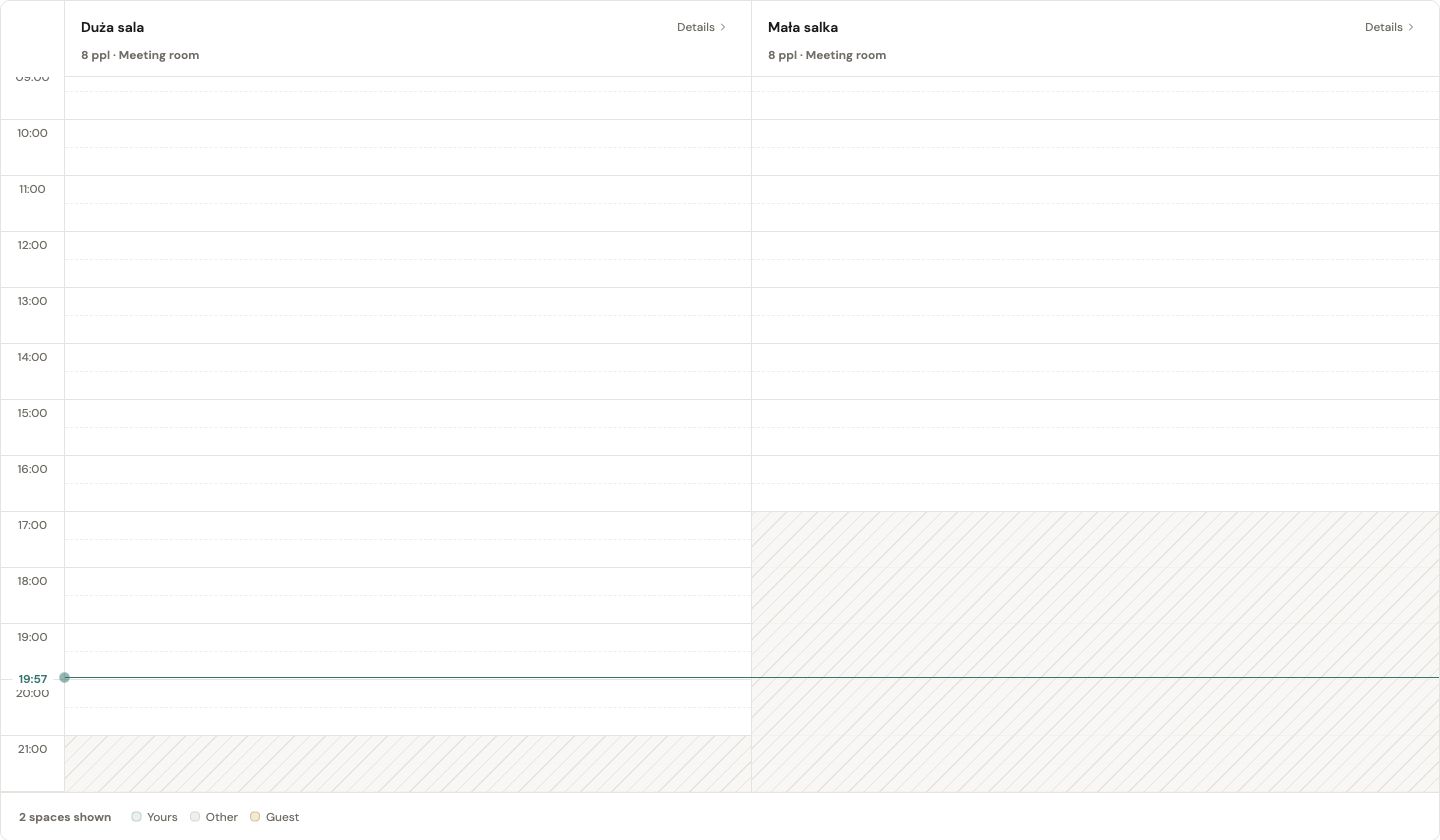
Compare the names and capacities in the booking view with the rooms people find on arrival.
Follow a client appointment from booking to room
Take a Tuesday 14:00 buyer appointment through your office process. The agent books “Project Room”, but reception directs arrivals to “Meeting Room 2”. Those names refer to the same space. A new colleague has no way to know that without asking.
Choose one name, align the door sign and booking listing, then update reception’s instructions. Check existing invitations before removing an old name entirely; someone may still arrive with it on their appointment details.
Next, inspect the room. Its listing promises a display, but the cable has been borrowed for another room. Decide whether to restore the equipment or correct the description. For an agent preparing a property presentation, “available room” and “suitable room” are different questions.
Finally, check the 15:00 reservation after the buyer appointment. It belongs to an old internal series whose organiser has changed teams. Ask who now owns it and whether the room is still needed before changing the booking.
These are separate actions: fix the naming mismatch, resolve the equipment description and confirm the recurring reservation’s owner. You do not need to postpone the first two while waiting for a decision on the third.
Turn findings into an action list
For every item, record the observation, proposed action, owner and next review date. Distinguish a confirmed correction from an idea that still needs discussion.
Prioritise errors that could send someone to an unavailable or wrong space. Then address unclear ownership and conflicting instructions. Larger layout changes can follow once the evidence and approval are sufficient.
Close an item only after checking the result in the place employees use.
Questions about office space audits
How often should we repeat the audit?
Choose a review rhythm that fits your rate of change. A new season, furniture move or change in office attendance can be a useful trigger.
Do we need utilization data to start?
No. You can check inventory accuracy, room names and policy ownership without it. Decisions about adding or removing space need stronger evidence than those basic corrections.
What should the audit deliver?
A verified inventory, documented discrepancies and a short action list with accountable owners.
Use the findings to assess your booking requirements. Explore Venuo’s meeting room booking and desk booking pages with that list beside you.